A new neural network for a classic engineering problem: identifying identical mechanisms
How can you tell if two complex mechanical designs are secretly the same? We taught a Hopfield neural network to solve this classic engineering problem automatically and efficiently.
In mechanical engineering, how do you know if two different-looking designs for a robot arm or an engine linkage are actually the same, just drawn differently? This is the “isomorphism” problem, and it’s a fundamental challenge in mechanical design.
This problem is not just academic; it’s essential for creating and cataloging new mechanisms. The trouble is that it’s computationally very difficult to solve. In our 2007 paper, published in Neural Processing Letters, we proposed a new way to tackle this using neural networks.
🧐 The problem: finding identical mechanisms is hard
When designing a new machine, engineers need to know if their “new” design is truly new, or just a new drawing of an existing one. This is “isomorphism identification”.
Traditional methods to solve this are computationally expensive. Even previous attempts to use neural networks weren’t perfect—they were often complex, difficult to automate, and didn’t always provide clear solutions.
💡 Our solution: a competitive hopfield network
We developed a new algorithm based on a specific type of neural network: a competitive Hopfield network.
Hopfield networks are a bit different from the deep learning models you hear about today. They are a form of recurrent network whose state “settles” into a stable solution, making them excellent for solving complex optimization problems. We designed a “competitive” version tailored specifically for the isomorphism problem.
🛠️ The key: an automatic and interpretable method
The biggest advantage of our approach isn’t just that it works, but how it works.
- It’s automatic: It’s designed for automatic computation, simplifying the identification process for engineers.
- It’s interpretable: Unlike many “black box” neural networks, our Hopfield network approach provides solutions that are directly interpretable.
- No tuning needed: A common headache with machine learning is tuning endless parameters. Our method doesn’t demand this, making it more robust and easier to use.
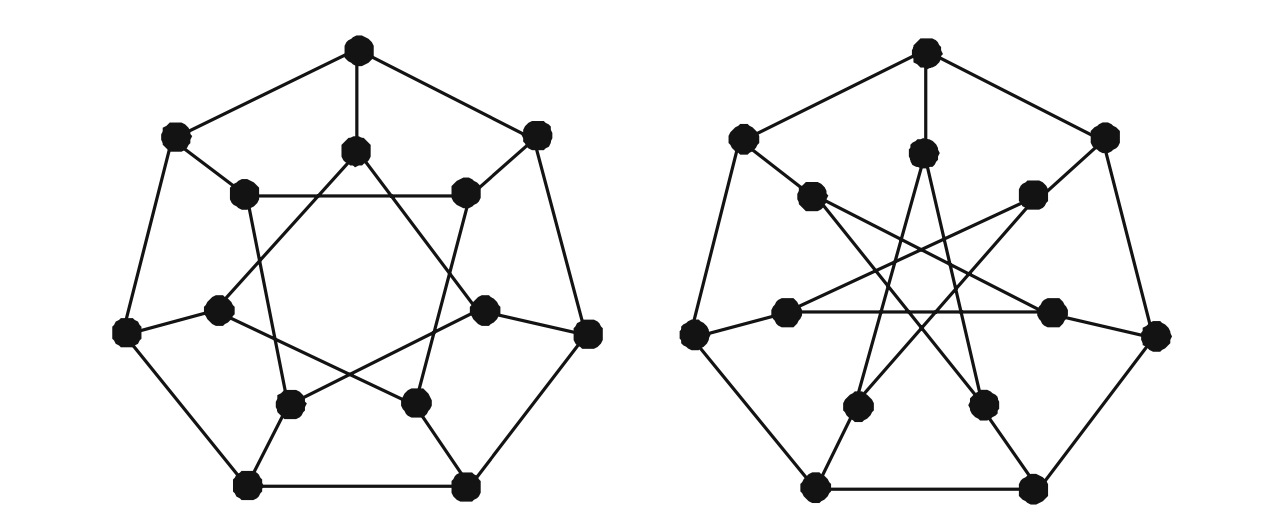
🚀 The results: it works rapidly and effectively
We didn’t just propose the theory. We built and tested the algorithm by applying it to isomorphism problems taken directly from recent mechanical engineering literature.
The simulation results were clear: our network is highly effective and “rapidly identifies isomorphic kinematic chains.” It successfully solved the test cases, proving it’s a practical and efficient solution to a long-standing engineering challenge.
🔬 Why does this matter?
This work provides engineers and designers with a new, automatic, and reliable tool for a fundamental design task. It simplifies the “synthesis of mechanisms,” which is a core part of designing every new complex machine, from engines to robotics.
📖 The full paper
For the complete technical details on the Hopfield network architecture, the algorithm design, and the full simulation results, you can read the original journal article.
Improving neural networks for mechanism kinematic chain isomorphism identification. Authors: Gloria Gálan-Marín, Enrique Mérida-Casermeiro, Domingo López-Rodríguez. Journal: Neural Processing Letters (vol 26 (2), 133-143)